Beginner’s guide to buying your first camera
So you’ve decided to pick up photography as a new hobby, but now that you see all those different camera’s you’ve gotten a little overwhelmed? First of all, welcome to the community! And second, let me help you find your camera match. Choosing a camera is like choosing a travel companion after all, it has to have the right personality and strengths to be perfect for you.
The 4 different types of camera's explained
When you're stepping into the world of photography, choosing a camera can feel a bit like packing for a big trip; exciting, but slightly overwhelming. There’s no one-size-fits-all answer, and that’s the beauty of it. Whether you're capturing quiet moments at home, sweeping landscapes, or spontaneous travel memories, the right camera should feel like an extension of your eye and your heart. Let’s break down the four most common types: DSLR, Mirrorless, Bridge, and Compact cameras, so you can find your perfect creative companion.
The DSLR - A classic workhorse
DSLRs are like the hard-case suitcase of the camera world—roomy, reliable, and full of potential. They have a mirror system that lets you see exactly what the lens sees through an optical viewfinder, and they offer beautiful image quality and full manual control. If you're looking to get serious about photography or want to experiment with different lenses, a DSLR might be for you. The downside? They’re on the heavier side, which isn’t always ideal when you’re hopping on a plane or hiking up a mountain. Alongside that, they’re maybe a bit more outdated as new technology has been able to give us something much better to work with. Brands known for their DSLR cameras are Canon and Nikon.
Best for: hobbyists and advanced photographers who like control
Not ideal for: avid travelers or casual snaps
Sensor sizes: Full Frame & APS-C
The mirrorless - A sleek all-rounder
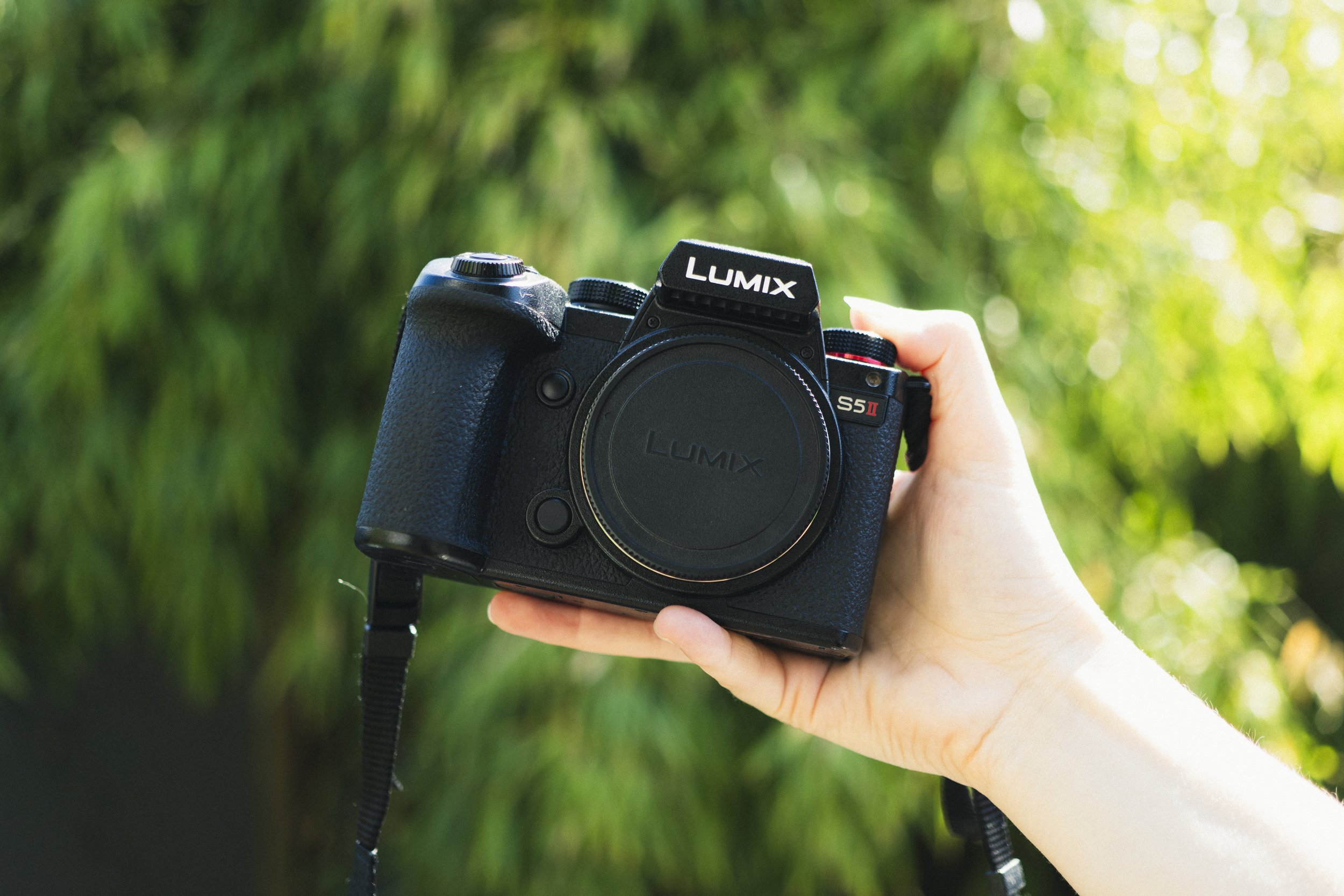
Mirrorless cameras are the newer, lighter sibling of DSLRs. Without a mirror mechanism, they’re more compact and quieter but still pack incredible power. You still get the option to switch lenses, and thanks to fast autofocus and real-time previews, they’re amazing for both stills and video. They’ve become a favorite among travel photographers (like me!) who want amazing quality without the bulk of a DSLR. Mirrorless cameras are in an uproar as more and more brands (but mainly Canon & Nikon) have started making them. Brands known for their mirrorless cameras are Panasonic Lumix & Sony, who were making them long before the hype.
Best for: Professionals, creatives constantly on the go, and hybrid shooters
Not ideal for: I wouldn’t be able to say
Sensor size: Full Frame, APS-C & Micro Four-Thirds

The Bridge - An in-between explorer
Bridge cameras live somewhere between compact and DSLR—a little like a Swiss Army knife. They look like DSLRs and often have impressive zoom lenses (think: safari or wildlife photos), but the lenses aren’t interchangeable. They offer more control than a compact and more zoom than most mirrorless lenses can manage out of the box, but the zoom is digital and not optical, which causes a loss of quality when you zoom into the maximum. If you don’t want to fuss with swapping lenses but still want creative freedom, this could be your match.
Best for: Hobbyists and those who want nice photos of their holiday to show the family
Not ideal for: Professional-level quality or flexibility and low-light shooters
Sensor size: One Inch & Micro Four-Thirds
The compact - An easygoing choice
Compact cameras (or point-and-shoots) are your grab-and-go option. They’re small, light, and super easy to use. While they don’t offer interchangeable lenses or full manual control, today’s models still produce beautiful photos—especially for social media or everyday use. If you don’t want to travel with much but want to have better quality than your phone can offer without all the fuss, a compact camera might just be for you.
Best for: casual shooters and minimalist travelers
Not ideal for: creative flexibility or professional results
Sensor size: One Inch or smaller
What are the key consideration points for beginners?
Here are some of the most important considerations when buying your first camera:
Budget
Before anything else, you have to determine how much you’re willing to invest in a camera. Remember that a camera body won’t be all you need. You will need accessories like lenses, camera bags, and memory cards as well. It is important that you set a realistic budget that can cover all of this.
Portability
I think the most important aspect of your first camera is the portability, and along with that, its size & weight. Having a camera that is too heavy or is uncomfortable to hold for periods of time can demotivate more than anything else. If you’re always on the move, a lighter & smaller camera is preferred, but when you’ll be working in the studio, a heavier camera is not so bad to have. I sacrificed some portability for better image quality. I sometimes still wonder if that was the best decision.
Ease of use & future growth
Consider your experience and long-term photography aspirations. If you’re a complete novice & are not planning on learning the fundamentals of photography, a compact or bridge camera is most likely what is best for you. They have an easy-to-use automatic mode and come in a ready-to-go package. However, if you are set on learning the fundamentals and have big photography ambitions, a DSLR or mirrorless camera will be a better fit as they offer much more creative control and will grow with you for longer.
Sensor size
There are a lot of different kinds of sensors that are put in cameras, but there are a few common ones. In short, the bigger the sensor size, the better the quality (if all other features are the same), which means that bigger sensor sizes are often desired by professionals but also come at a higher price point.
The smaller sensor types, in order from smallest to biggest, are One Inch, Micro Four-Thirds, and APS-C sensors. These are found in the more budget options for beginners and advanced photographers and are more rarely used by professionals. They have a crop-factor which means that the focal length you see on the lens has to be multiplied by the crop-factor of the sensor to get the true focal length. This makes for great travel cameras because your setup gets to be much lighter & smaller despite still having the same focal lengths as with a full-frame camera.
The bigger sensor types are full-frame and medium-format sensors. These are found in cameras made for advanced & professional photographers, though you’ll find few advanced photographers with a medium-format camera. These are some of the most high-end cameras and are made by the lesser-known companies like Hasselblad, Fujifilm & Leica.
Intended use
Are you looking to buy a camera to take photos on your safari trip, or are you looking to take photos of your family and everyday memories? What you’re buying the camera for can have a great impact on you decision. Different cameras excel in different fields, for landscape photography, you will want a camera that can support a wide-angle lens, yet for street photography, a camera that is discreet is more important than the lenses that are available.
Final thoughts
Choosing your first camera does not have to feel like a big, scary decision. It is really about finding one that fits your lifestyle, your creative goals, and the way you want to capture the world. Whether you go for the flexibility of a mirrorless, the reliability of a DSLR, the convenience of a compact, or the practicality of a bridge camera, the best choice is always the one that inspires you to actually take it with you and start shooting.
A camera is only a tool; the real magic comes from your perspective and creativity. Start with what feels right for you now and let your skills and gear grow with you over time. Do not worry too much about having the perfect setup. The best camera is the one that helps you tell your story, and the only way to discover that is to go out and start taking photos.
